
Scheduling System for Research Coordinators
SaaS · Product Design

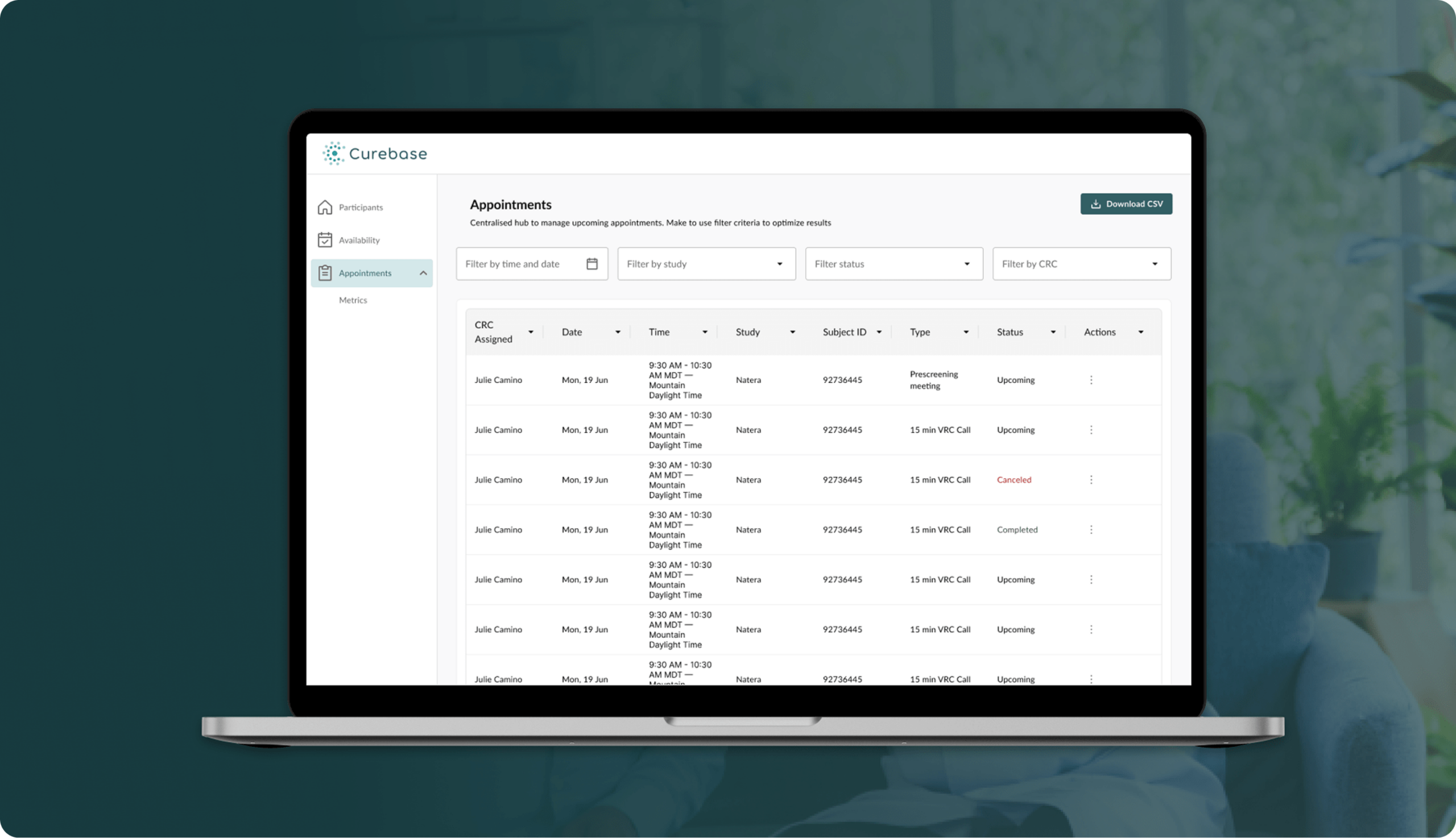
CONTEXT
Curebase Clinical Research Coordinators (CRC’s) faced challenges in task completion, often requiring assistance from the Implementation team, resulting in delays even for simple tasks.
Clinical Research Coordinators (CRCs) use the platform to:
- Manage participant appointments
- Schedule study visits
- Track trial progress
- Coordinate study resources
THE TEAM
Senior Product Designer (Me)
Product Manager
Implementation Specialist
Clinical Research Coordinator
1 Engineer
1 QA
SCOPE
Scheduling workflows
Availability Management
Appointment Tracking
TIMELINE
June 2023- Oct 2023
The redesigned scheduling system eliminated recurring support tickets by allowing CRCs to manage their own availability. Simplified workflows reduced manual effort, helping CRCs complete scheduling tasks 40% faster and enabling scheduling to scale within the Curebase SaaS platform.
Defining The Problem
Clinical Research Coordinators struggled with scheduling tasks due to fragmented tools and limited system capabilities.
These challenges created operational inefficiencies and increased reliance on internal support teams.
PROBLEM MAPPING
Limited Control Over Availability
Fragmented scheduling tools
CRCs could not set or edit their own availability. Changes required assistance from the Implementation team.
Managing appointments required coordinating across multiple systems, including external calendars.
Manual Operational Work
CRCs often manually tracked participant status and scheduling details across several tools.
Research & Discovery
To understand the scheduling challenges, I led a Known / Unknowns workshop with the Product Manager.
This exercise helped clarify what we already knew about the scheduling workflow and identify knowledge gaps that required research.
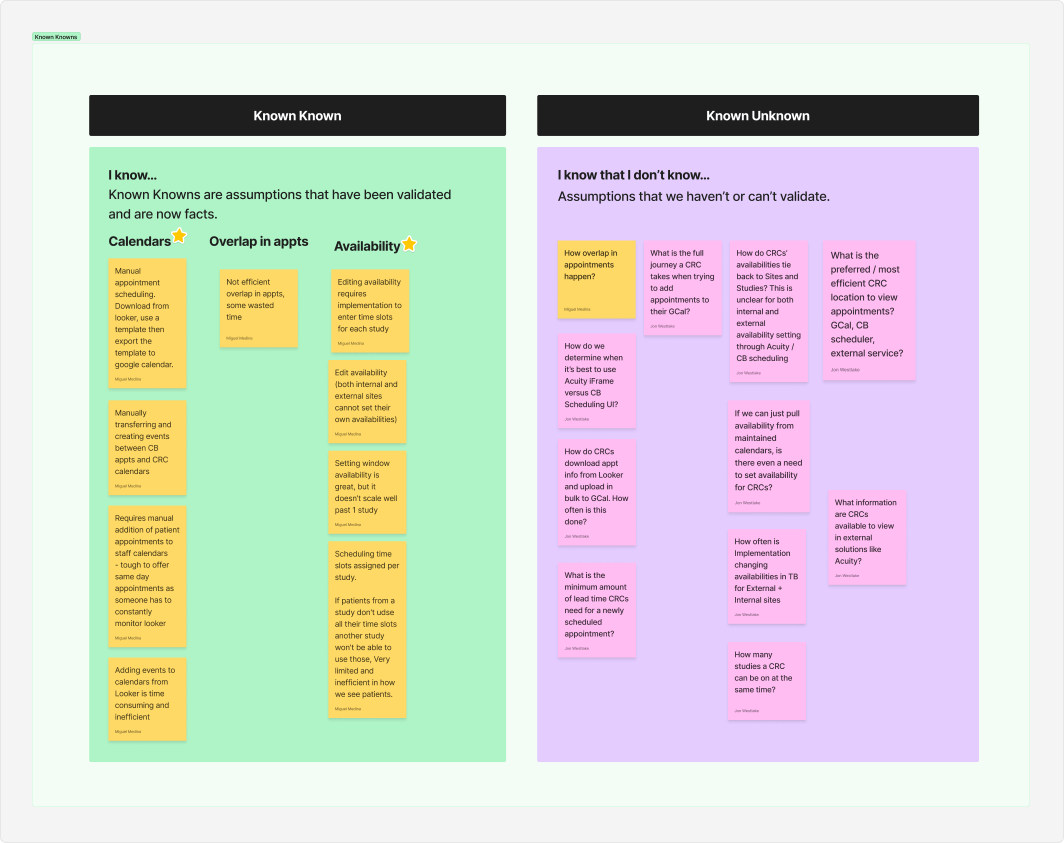
Known Constraints
Key Unknowns
CRCs frequently use external tools such as calendar applications and manually add participant appointments.
CRCs cannot independently edit or manage their availability.
Several critical questions required further investigation:
What is the full scheduling journey for CRCs?
How do CRC availability settings relate to studies and research sites?
How often does the Implementation team update availability on behalf of CRCs?
User Research
To answer these questions, I conducted seven user interviews with CRCs, collaborating closely with the product manager.
Insights from the interviews were synthesized using an affinity diagram, which helped reveal common themes and workflow pain points.
The results were shared with product and engineering teams to align on opportunities for improvement.
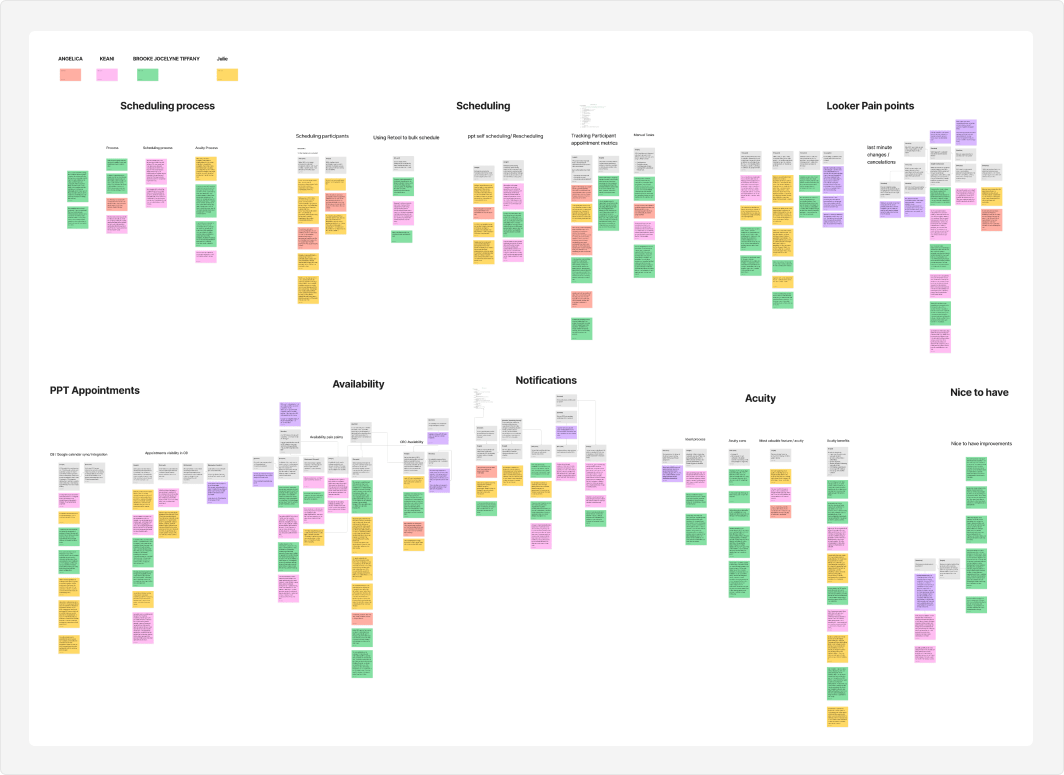
Scheduling Interpreted Feedback from User Intervies ( Affinity Diagram )
KEY INSIGHTS
Availability management
Scheduling required manual work
Most issues were not about scheduling itself, but about managing CRC availability.
CRCs relied on other teams to update their availability, creating delays.
CRCs used multiple tools to coordinate appointments.
Without a single source of truth, scheduling tasks required unnecessary manual effort.
Appointment tracking lacked visibility
The system lacked robust appointment tracking and reporting, limiting the ability to monitor study progress and allocate resources effectively.
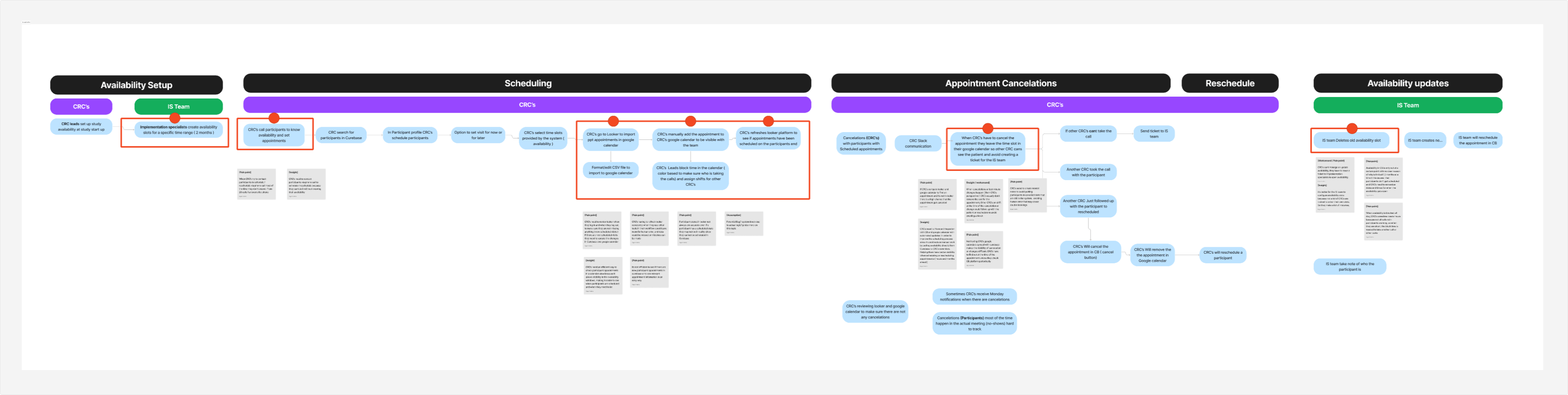
Highlighted pain points of the CRC scheduling experience
Priorization
Because the scheduling system was complex and timelines were tight, we needed to focus on the most impactful improvements.
I led an Impact Pyramid workshop with the product and engineering teams to prioritize opportunities based on user impact and business value.
As a team, we defined four critical areas for the first iteration:
1- Availability Setup
2- Appointments

Prioritized scheduling flow items and requirements for MVP
Design Strategy
Give CRCs scheduling control
CRCs should be able to manage their own availability without relying on the implementation team.
Reduce operational complexity
The system should consolidate scheduling data into a single workflow.
Improve scheduling visibility
CRCs should be able to easily track participants' appointments and study progress.
Early exploration focused on designing a system that allowed CRCs to manage availability while maintaining flexibility for different studies.
Design Solutions
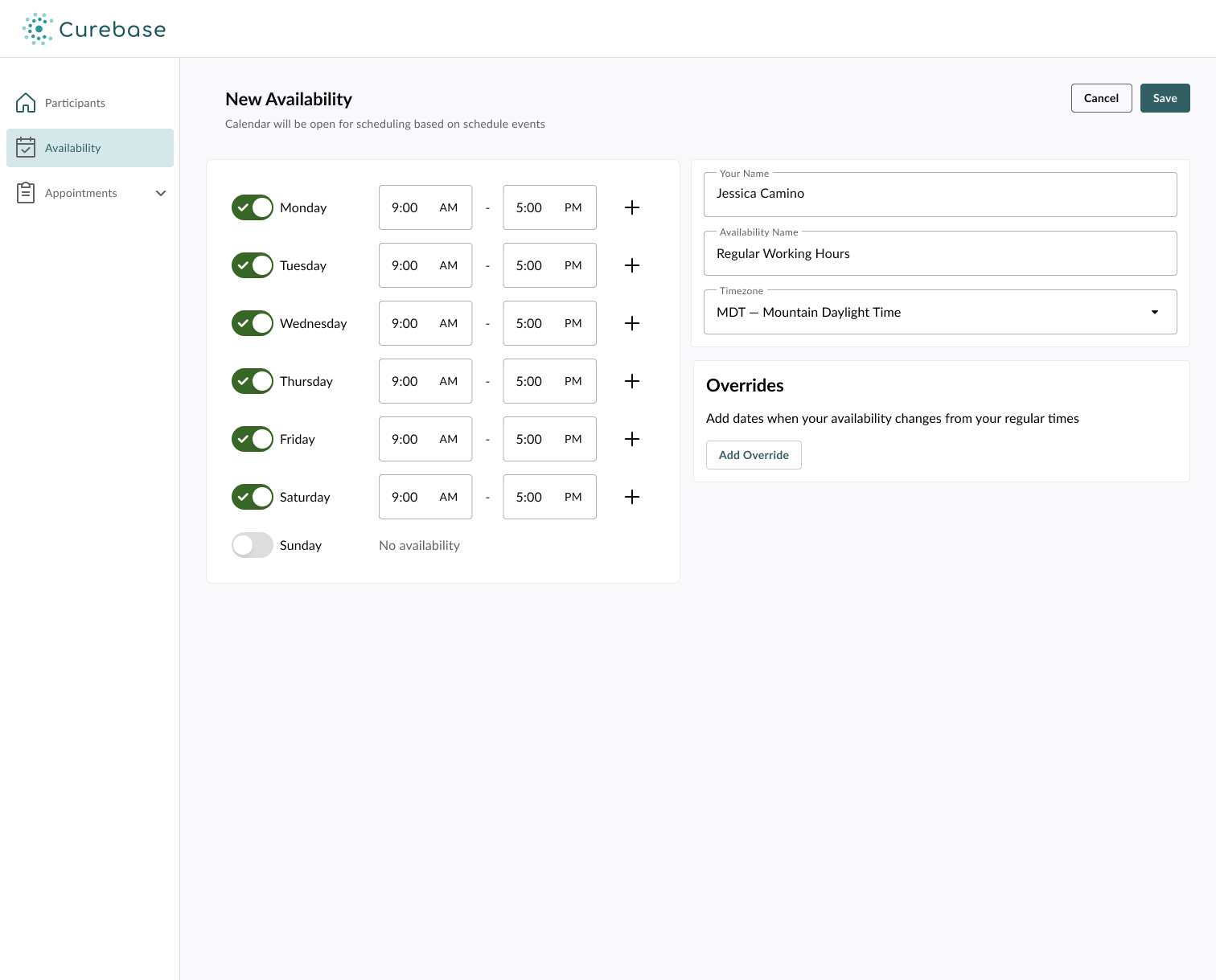
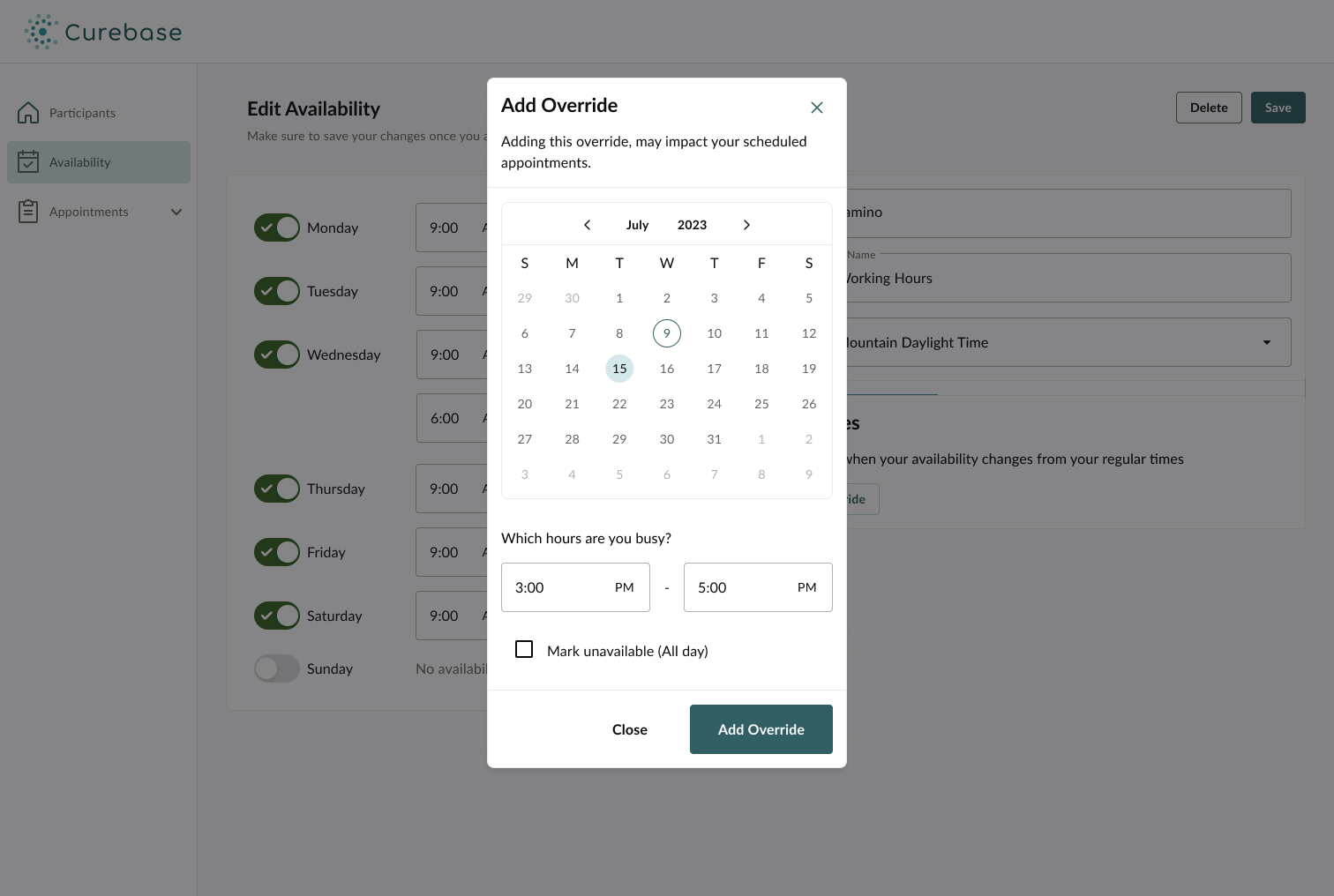
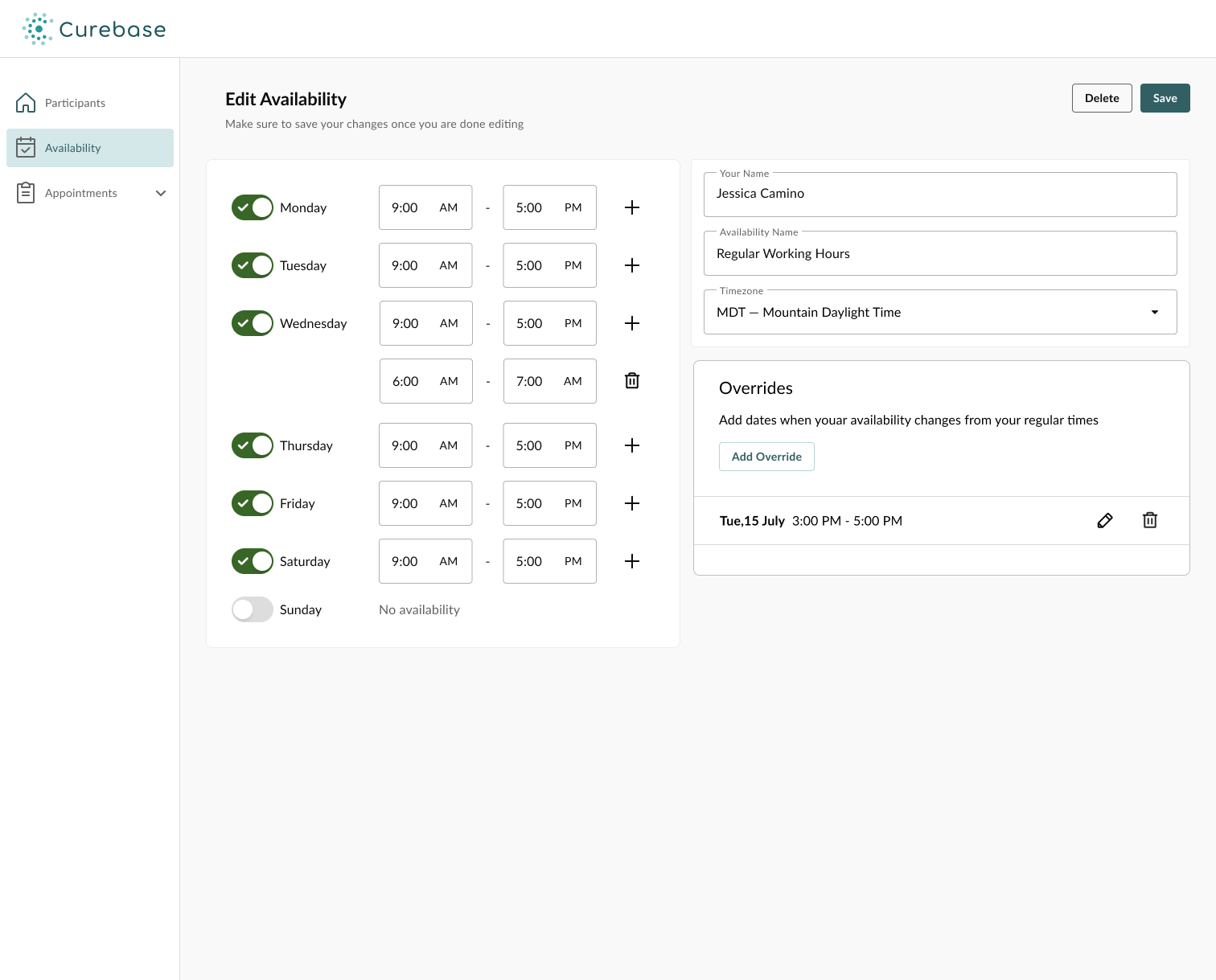
Availability Setup
Availability is now configured at the individual CRC level, instead of at a study level, due to the flexibility it gives to manage CRC individual working hours.
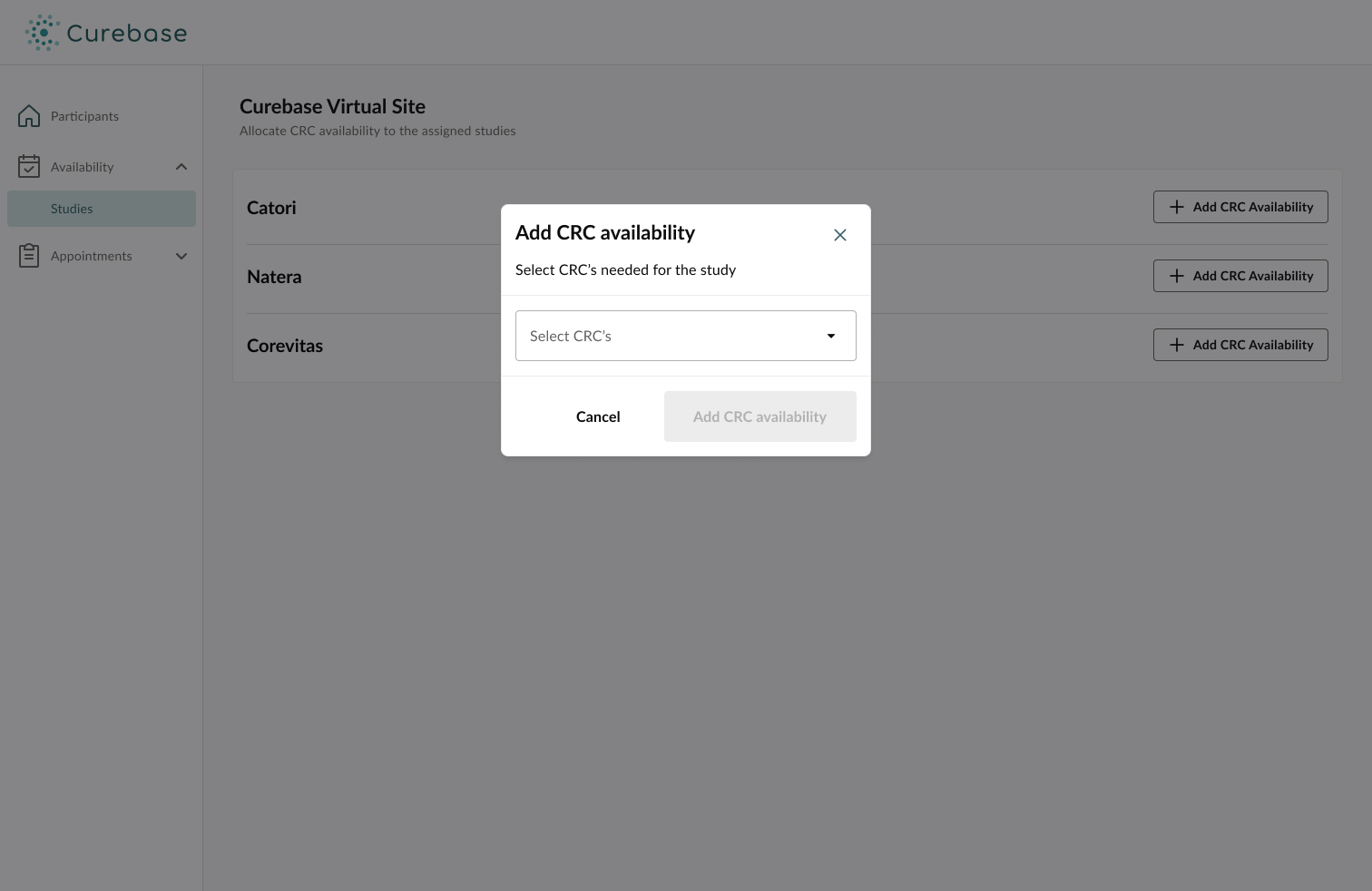
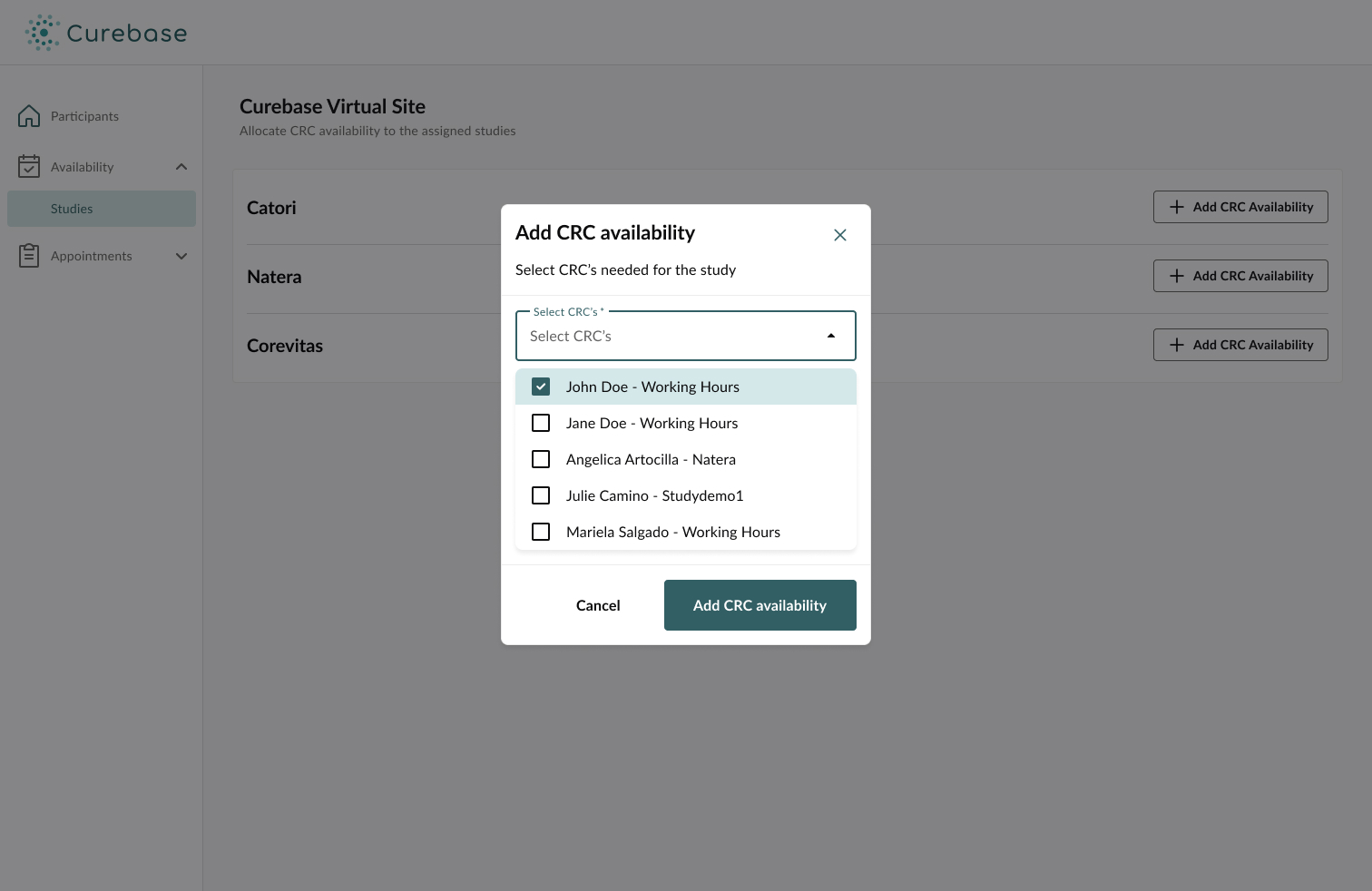
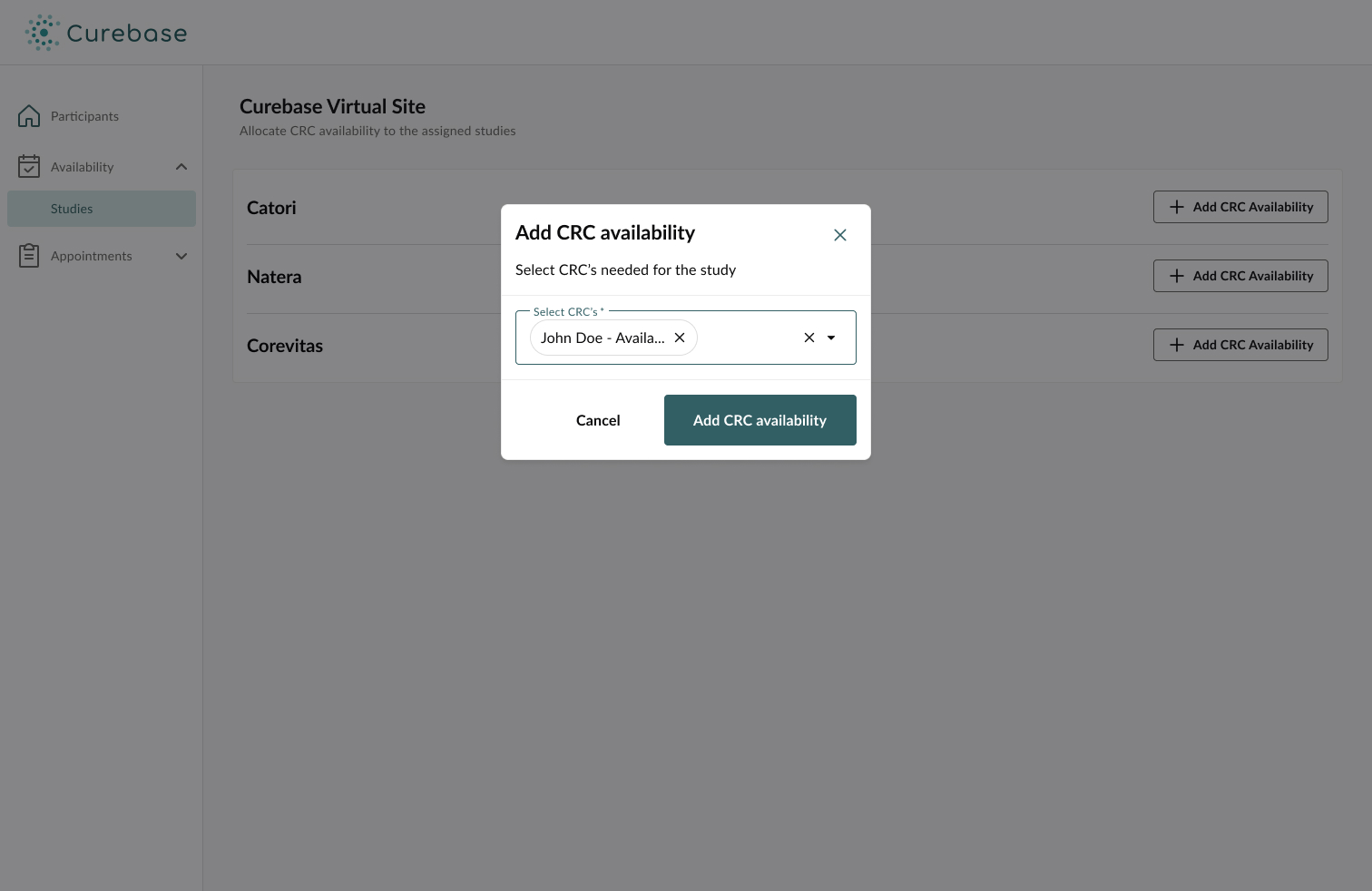
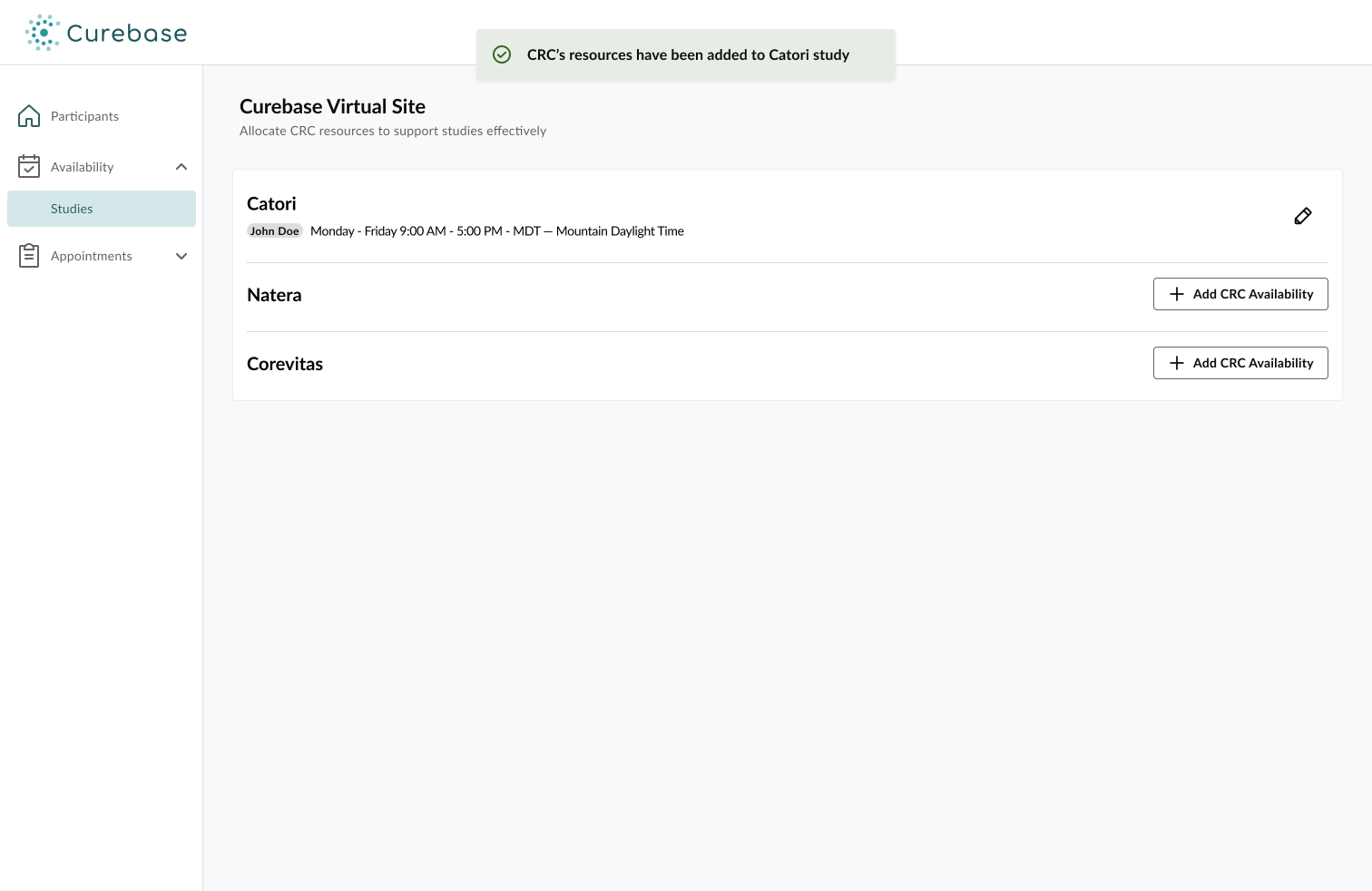
CRC Leads
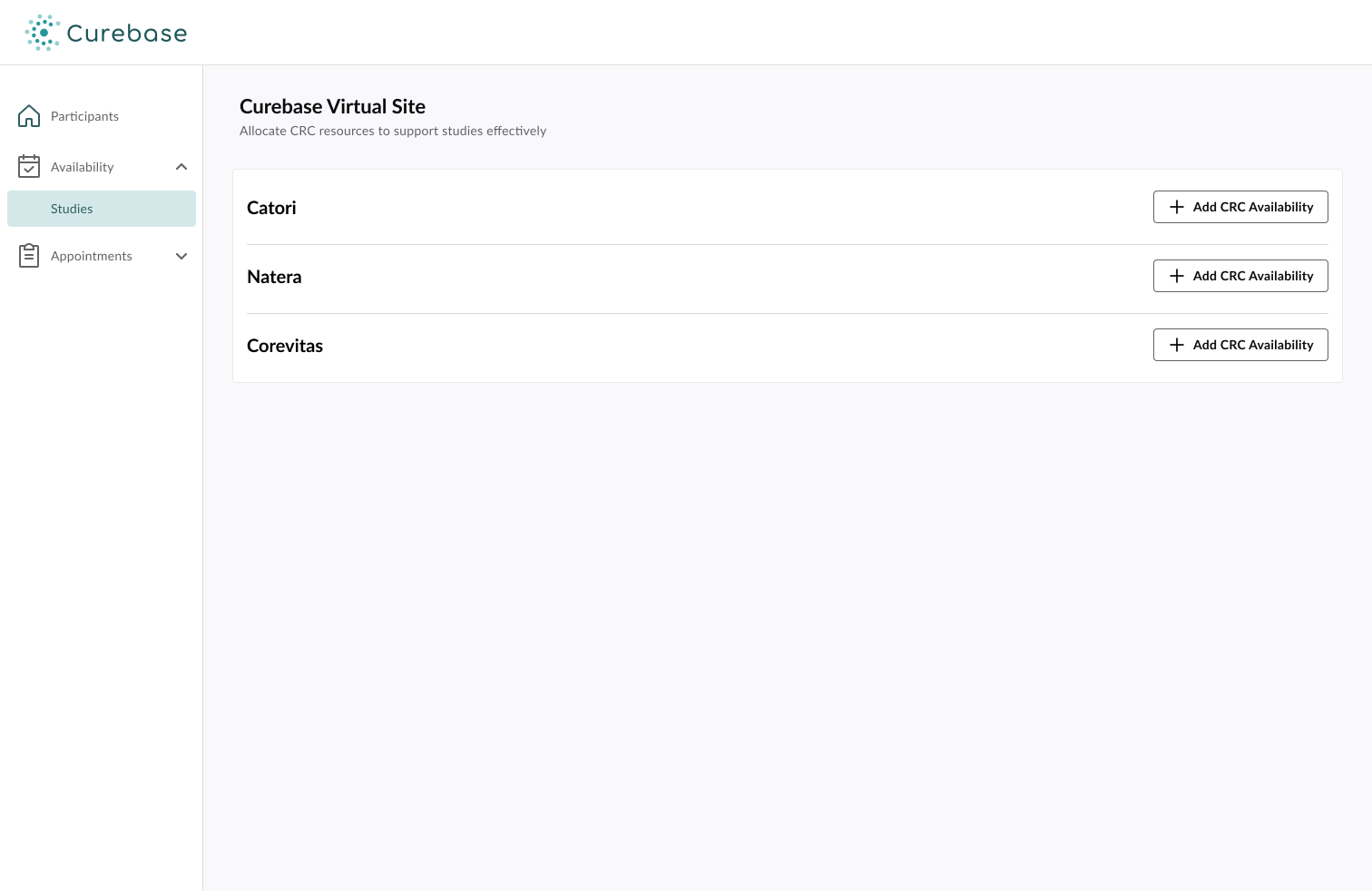
In addition to adding their own availability, CRC’s leads have the ability to assign CRC resources based on their created availability to the different studies they are managing.
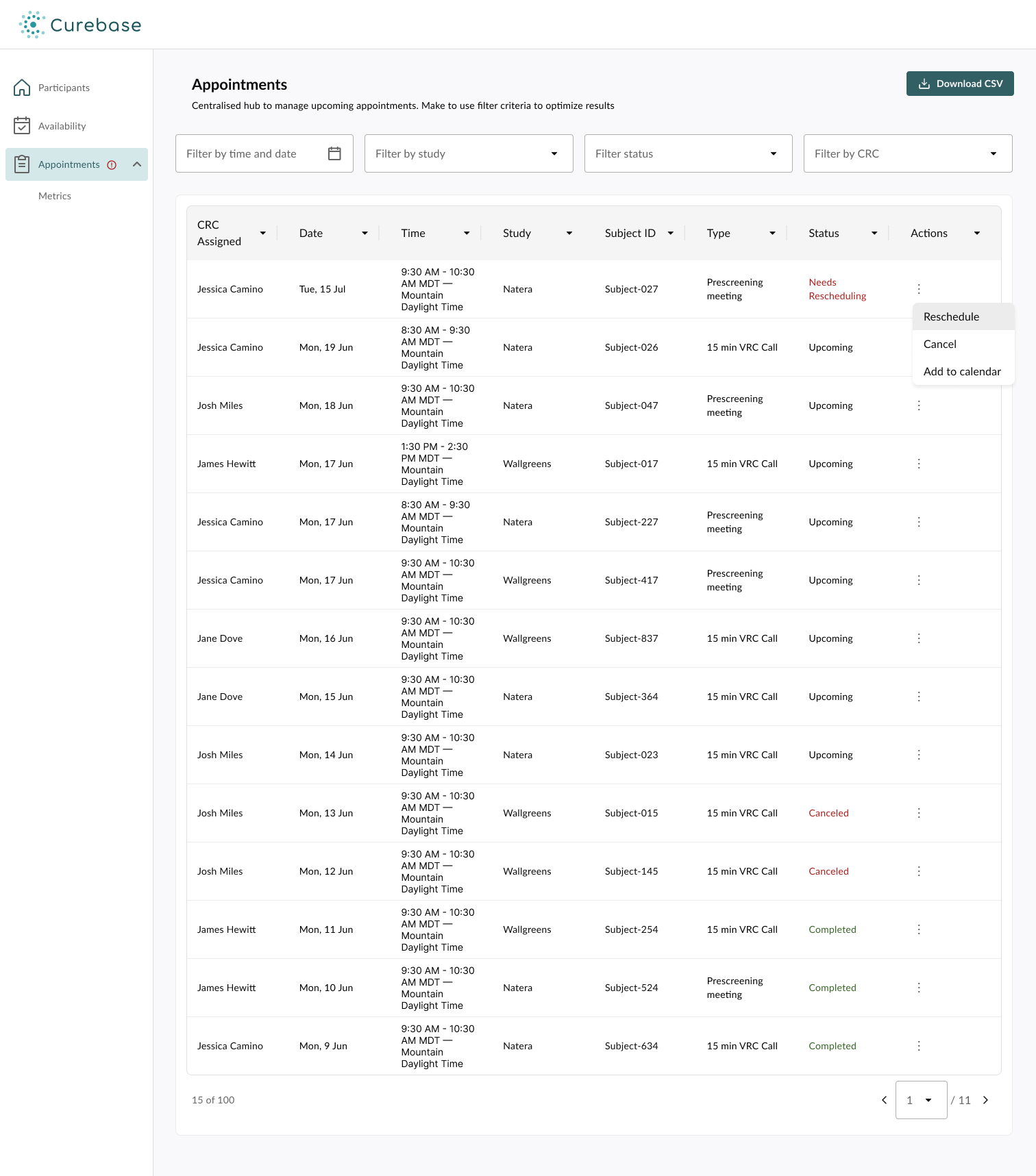
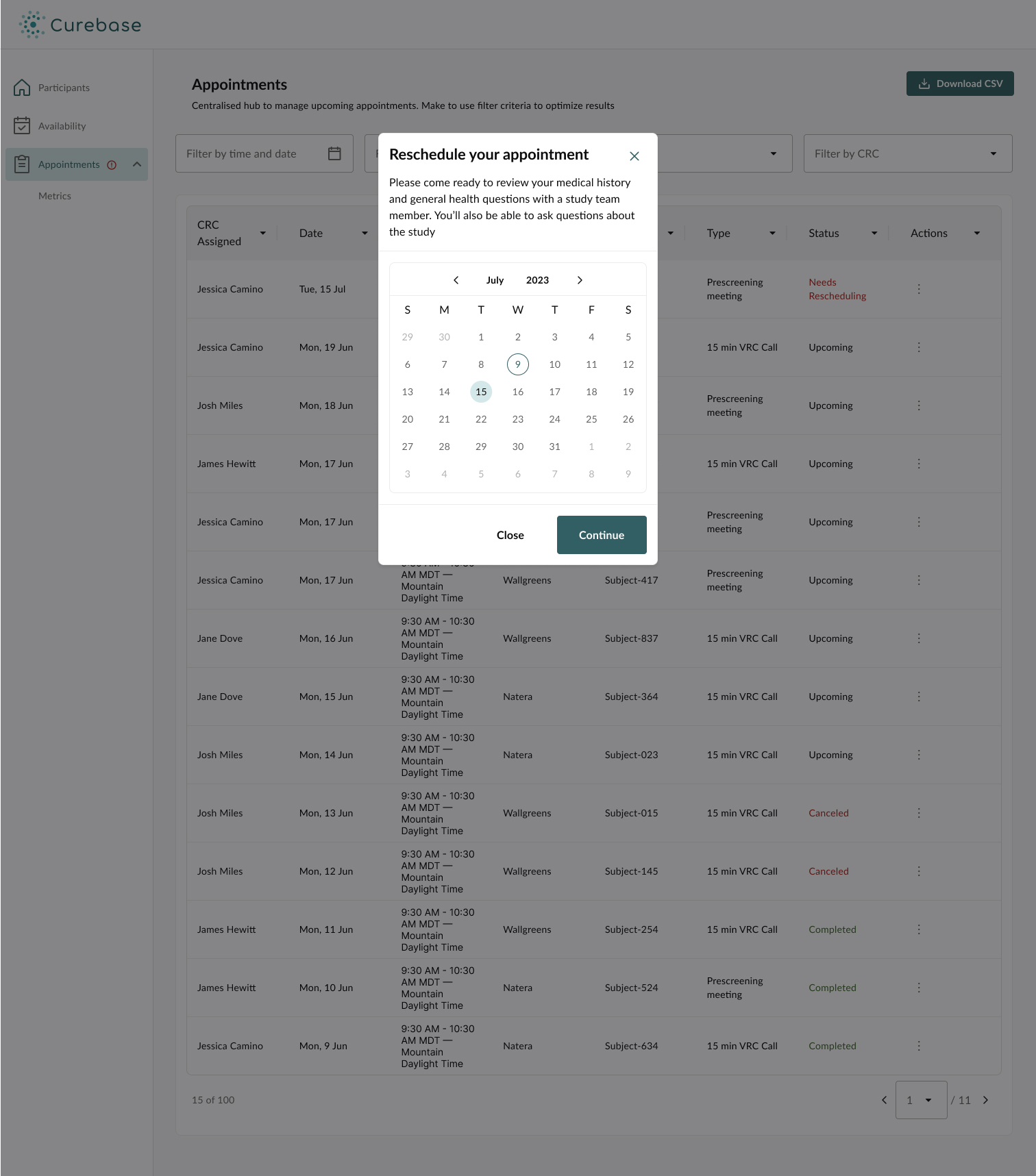
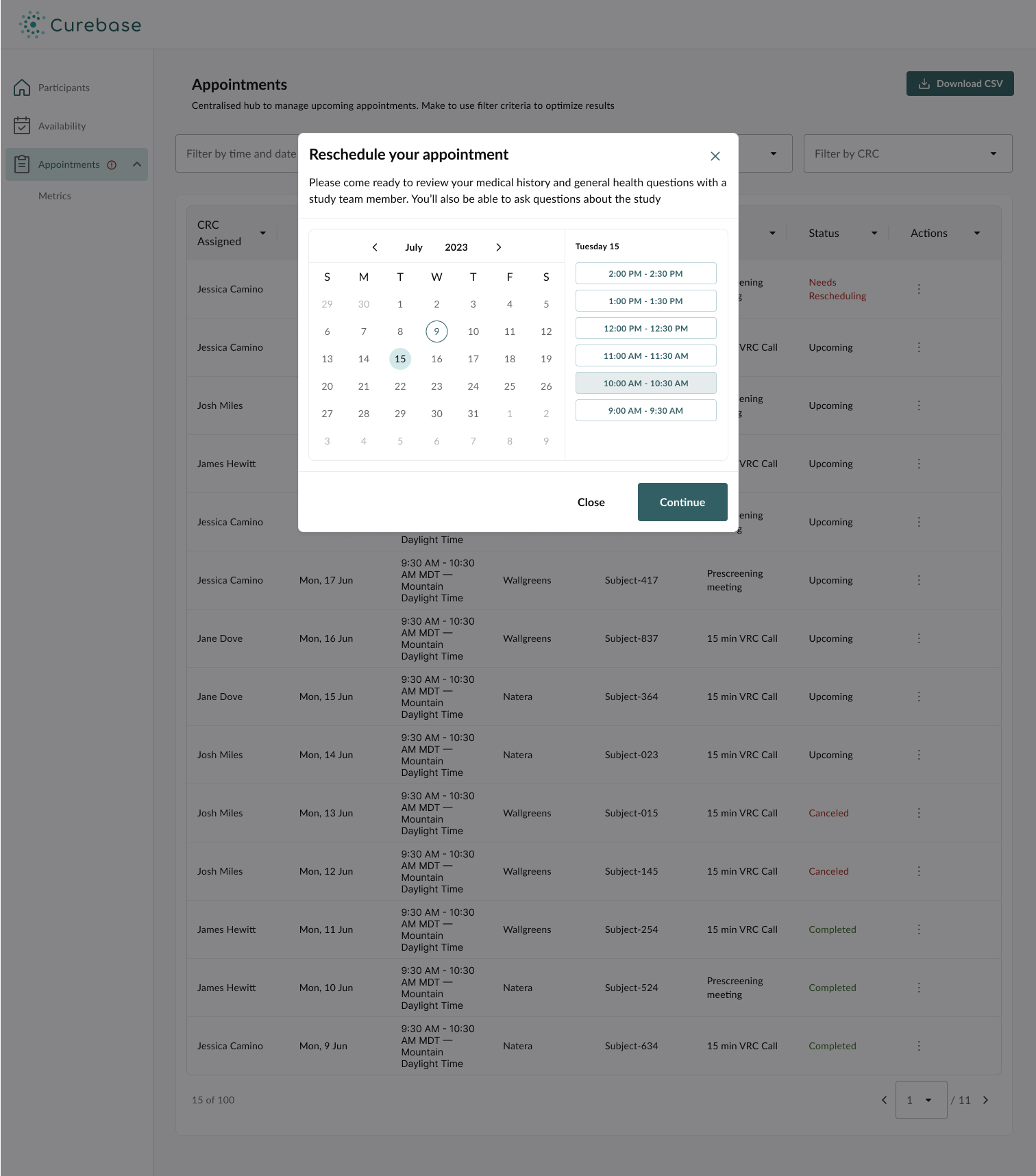
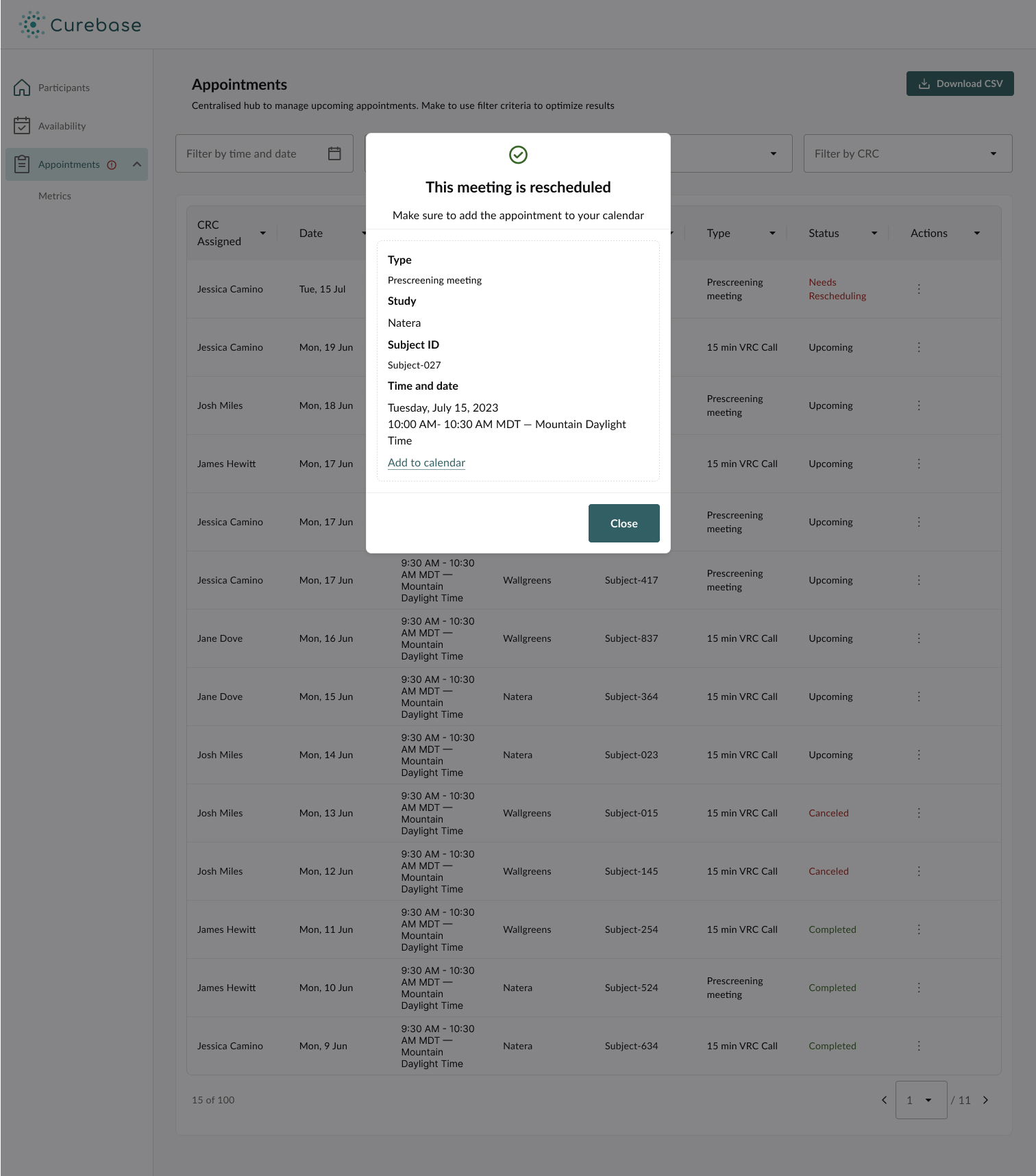
Appointment Management
CRC’s and CRC leads now can rely on an accurate section to easily find participants and follow up with them based on their current status. Additionally, they now have the ability to download comprehensive reports to gain insights into study bottlenecks, enabling efficient resource planning and demand forecasting management.
Results
The redesigned scheduling system significantly improved operational efficiency.
Reduced support overhead
CRC support tickets related to editing availability dropped to zero.
Improved scheduling efficiency
CRCs now save over 40% of time when completing scheduling tasks. This allows coordinators to focus more on participant follow-ups and study engagement.
Enabled SaaS expansion
The improved scheduling infrastructure can now support external clinical trial sites with minimal configuration, supporting Curebase’s SaaS growth.
Takeaways
What Worked
Future Opportunities
Involving CRCs and implementation specialists throughout the process helped identify real workflow issues early and validate design decisions quickly.
Future iterations could focus on: Automated scheduling workflows, participant self-scheduling capabilities, and deeper analytics for study planning.

Let's build better products together!
Feel Free to send me a line at mmedina.ldg@gmail.com
Miguel Medina Design All Rights Reserved 2026